Contact:
E-mail:
Phone: 06 33 65 51 19

How to order prints…

Photographs of the Champs-Élysées and place de la Concorde by David Henry, featuring pictures of l’arc de Triomphe, the Eternal Flame, the Tomb of the Unknown Soldier, the fontaine des Mers, fontaine des Fleuves, l’Opéra Garnier, l’église de la Madeleine, the Obelisk of Luxor, the Grand Palais, l’église de la Sainte-Trinité and the Colonne Vendôme. Regardez cette page en français

Go to the main index of photographs of Paris, or take a look at pictures of… All of these pictures are available as high-resolution TIFF scan files, and naturally, any of these pictures can be converted to black and white. Many others were taken at each photo shoot, so there are plenty of other choices if you don’t see exactly what you are looking for. Photography shoots can also be arranged in Paris and the surrounding regions…


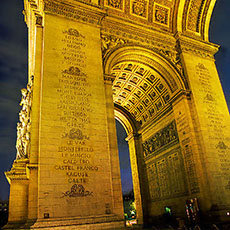
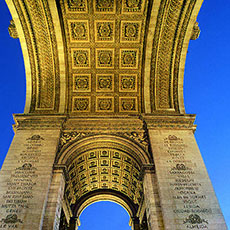
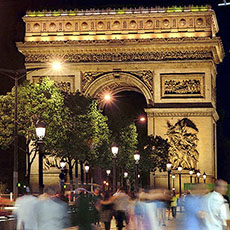
A view under the arches of arc de Triomphe at night

L’arc de Triomphe in the middle of étoile Générale de Gaulle

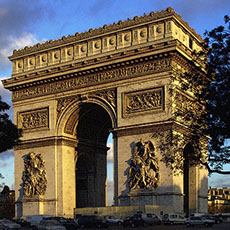
L’arc de Triomphe was commissioned by Napoléon in 1806 after his victory at Austerlitz, and finally completed in 1836 under the reign of King Louis-Philippe.

The western façade of l’arc de Triomphe

A nocturnal transversal view under the arches of arc de Triomphe

L’arc de Triomphe looking south towards avenue Kléber
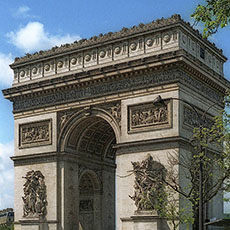
The first Roman arches were located at the entries of the cities. Soldiers returning from a military campaign had to lay down their weapons before passing under the arch. By doing so, they were symbolically reinstated as a normal citizen.

L’arc de Triomphe in the spring time

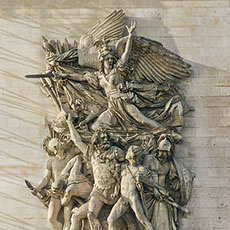
Ordered by the July Monarchy, François Rude, an artist from Dijon made the sculpture nicknamed «The Marseillaise».

La Marseillaise, celebrated on l’arc de Triomphe

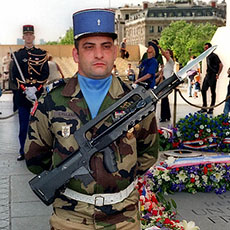
Behind his right shoulder is the eternal flame, and the Tomb of the Unknown Soldier

A soldier in front of l’arc de Triomphe on July 14, the French national holiday, 2003
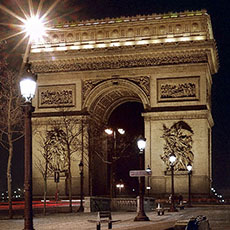
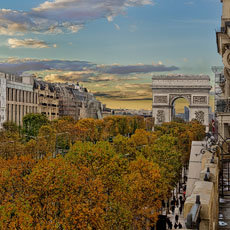
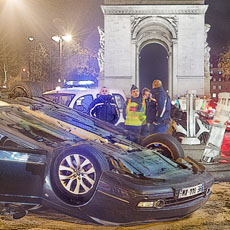
L’arc de Triomphe viewed from the champs-Élysées on a very cold January night.

L’arc de Triomphe just after New Year’s

L’arc de Triomphe viewed from the north side of the champs-Élysées

L’arc de Triomphe and l’avenue des champs-Élysées towards midnight, on a warm summer evening

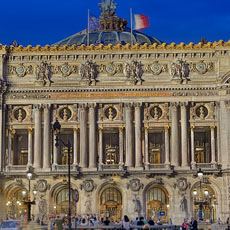
The Opéra Garnier was finished five years after Napoleon III was overthrown, in 1875.

The eastern side of Paris’ Opéra Garnier
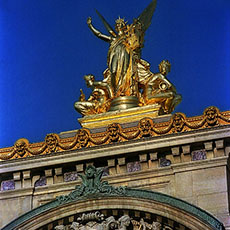
Built between 1862 and 1875, the Palais Garnier is a baroque example of neoclassicism: It has an ornamented façade, monumental stairs and an Italian-style hall with paintings by Marc Chagall on the ceiling.

Charles Garnier’s Opéra is a legacy of Haussman’s architecture

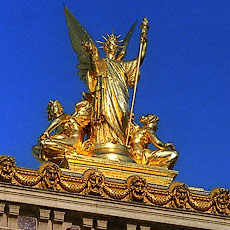
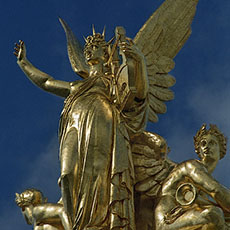
L’Harmonie, a group of statues sculpted by Charles-Alphonse-Achille Gumery, at the top of the western edge of the Opéra Garnier’s main façade.

L’Harmonie, a sculpture at the top of the Opéra Garnier

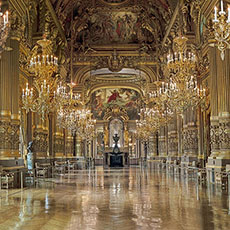
The Grand Foyer inside the palais Garnier, looking towards the west. Charles Garnier intended the Grand Foyer to resemble the gallery of a classical chateau.

The Grand Foyer inside the Garnier Opera house

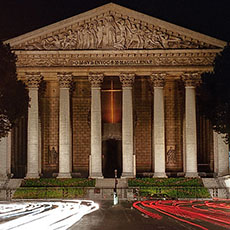
L’église Sainte-Marie-Madeleine traces its origins to 1764. In 1806 Napoleon restarted the construction as a temple to the glory of the French army. Under the restoration, King Louis the 18th decided the structure would be used as a church.

L’église de la Madeleine seen from rue Royale
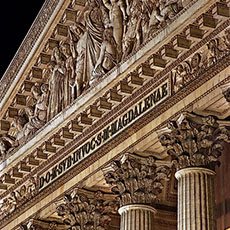
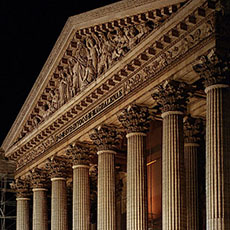
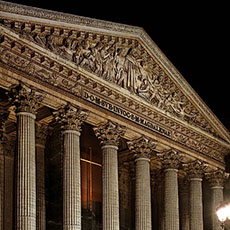
The upper portion of la Madeleine’s façade features a Last Judgment scene, sculpted by Henri Lemaire in 1833.

The central pediment of église Sainte-Marie-Madeleine’s façade

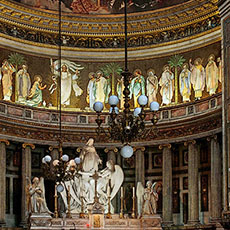
Inside l’église de la Madeleine: Above is a painting by Jules-Claude Ziegler, and below, a mosaic by Charles-Joseph Lameire.

Inside l’église Sainte-Marie-Madeleine

The construction of l’église Sainte-Marie-Madeleine took place as Paris expanded west into faubourg Saint-Honoré in the second half of the 18th century.

La Madeleine seen from rue Duphot

King Louis the 15th, laid the first stone of the Madeleine April 3rd, 1763. Construction of the Madeleine was stopped by the revolution in 1791, when the roman columns and a few walls had been built.

The western corner of église de la Madeleine

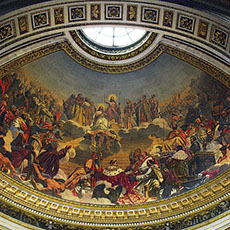
A History of Christianity, a painting by Jules-Claude Ziegler in the cupola of the choir inside l’église de la Madeleine, featuring Mary Magdalene, supported by clouds carried by three angels.

The History of Christianity, a mural above the high altar of l’église Sainte-Marie-Madeleine

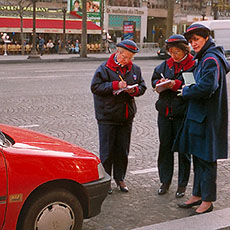
Around here people refer to parking tickets as “Papillons”, or butterflies

Writing tickets on the champs-Élysées

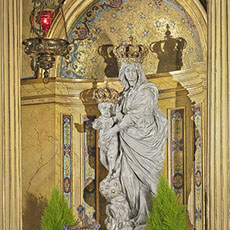
The altar of the brotherhood in Basilica Notre-Dame des Victoires dates from 1873.

The statue of the Virgin Mary in Notre-Dame des Victoires

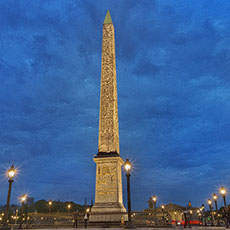
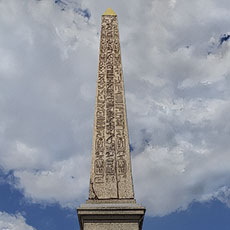
The 3,300-year-old Obelisk of Luxor, raised in the middle of place de la Concorde in 1836, was originally inside the Temple of Thebes.

The Obelisk of Luxor at place de la Concorde

Place de la Concord: from left to right we see l’Hôtel de Crillon, the Fontaine des Mers, the obelisk of Luxor, and église de la Madeleine, at the other end of rue Royale.

Place de la Concorde, looking towards the north
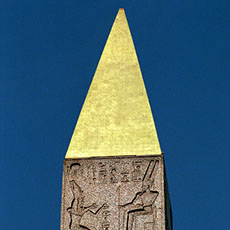
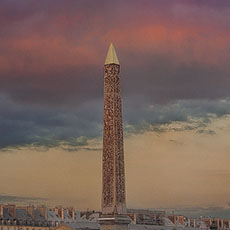
The Obelisk of Luxor’s red granite column is 75 feet tall including the base, and weighs over 250 tons.

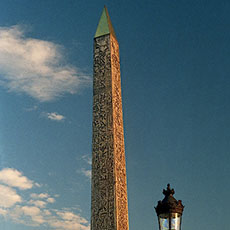
The golden pyramid at the top of the Luxor Obelisk

The Obelisk of Luxor arrived in Paris on December 21st 1833. Three years later, on October 25th 1836, King Louis-Philippe had it placed in the center of Place de la Concorde.

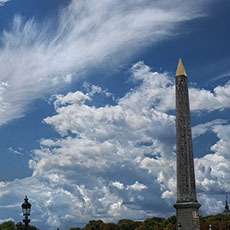
Clouds floating behind the Luxor Obelisk

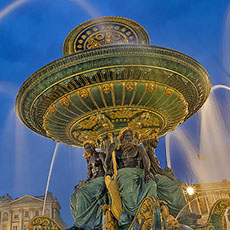
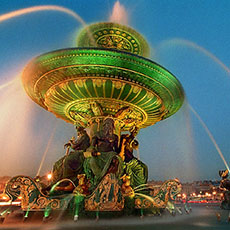
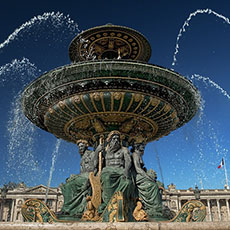
In total, the fountain, built entirely of cast iron, weighs about 50 tons.

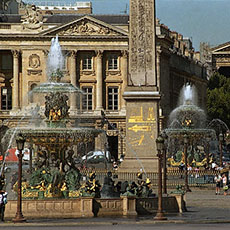
The Fontaine des Mers, place de la Concorde
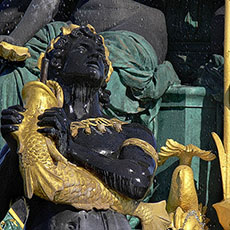
A statue of a triton in the Fontaine des Mers. The skin is made of dark brown Florentine bronze, their clothes of green Venetian bronze, the accessories and ornaments are gilt.

A triton in the Fontaine des Mers, place de la Concorde

The square was given its present name after the Reign of Terror in the hope that it would be a place of peace and harmony.

The setting sun lights up a fountain’s spray at place de la Concorde
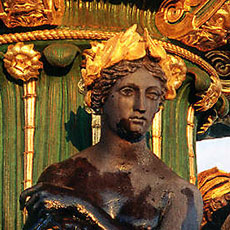
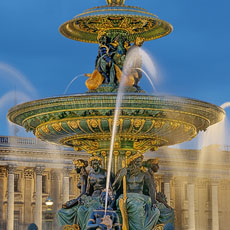
The fountains in place de la Concorde were built in the nineteenth century and depict river and maritime navigation

Three statues in the fontaine des Fleuves at place de la Concorde

The fountains’ architect, Jacob-Ignaz Hittorff took his inspiration from the fountains of Maderno in Saint Peter’s square in Rome.

The Fontaine des Mers sprays down Parisian pedestrians

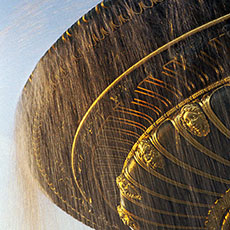
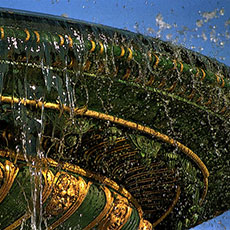
Celebrating the arrival of water in Paris, the fontaine des Fleuves is full of symbols representing rivers.

Water spilling over the edge of fontaine des Fleuves

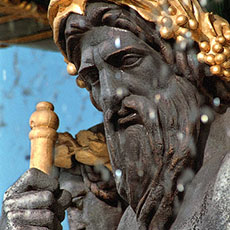
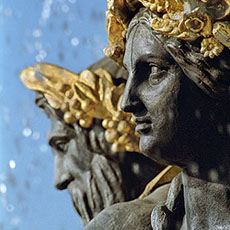
A profile of one of the Fontaine des Mers’ three tritons, with a nymph behind him.

A profile of one of the Fontaine des Mers’ tritons, place de la Concorde

The south side of the Fontaine des Fleuves with l’hôtel de Crillon, l’hôtel de Coislin and the Ministère de la Marine behind, in place de la Concorde.

The Fontaine des Fleuves in place de la Concorde
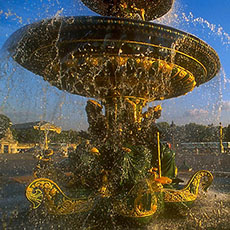
The faces of a triton and a Nereid in the fontaine des Mers. Designed by Jacques-Ignace Hittorff, his inspiration was the twin fountains in Piazza San Pietro in Rome, which also are placed on either side of an obelisk.

Statue faces in a fountain in place de la Concorde

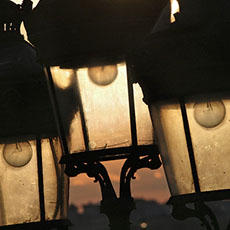
A cluster of streetlights at place de la Concorde. From the end of the nineteenth century, gas streetlights were progressively replaced with electric versions.

Streetlights in place de la Concorde

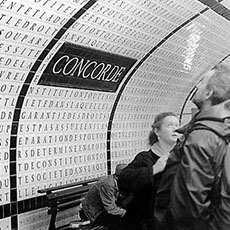
The Rights of Man and Citizens (les Droits de l’Homme et des Citoyens) are written on the tiles. All the spaces and accents have been removed, and all the punctuation moved to the bottom two rows.

Place de la Concorde métro station

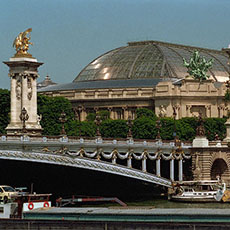
The Grand Palais, seen across pont Alexandre III, from quai d’Orsay on the left Bank.

The Grand Palais seen from the left bank

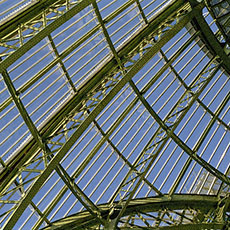
Iron girders supporting the Grand Palais’ skylight.

The ceiling of the Grand Palais

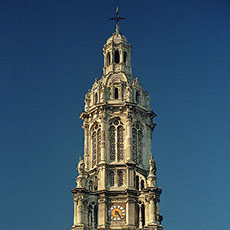
Towards the end of rue de la Chaussée d’Antin, l’église de la Trinité was commissioned by Georges Eugène Haussmann in 1861, finished in 1867 and consecrated in 1913.

L’église de la Sainte-Trinité, at place d’Estienne d’Orves
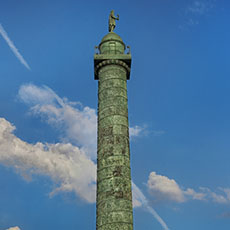
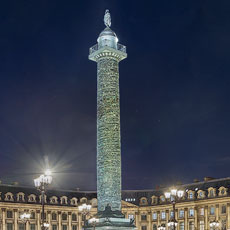
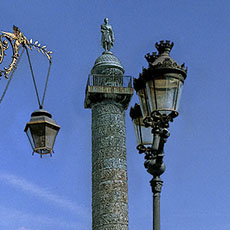
Colonne de Vendôme was built from metal melted down 1250 artillery pieces taken from Russian and Austrian armies at the Battle of Austerlitz in 1805.

Colonne Vendôme, a monument to Napoléon
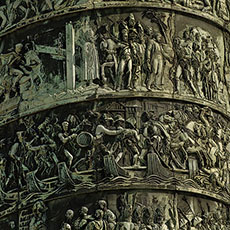
The colonne de Vendôme tells the story of the battle of Austerlitz on 425 bronze plaques hung on the column’s stone core.

A detail of the bas-relief sculptures on Colonne Vendôme
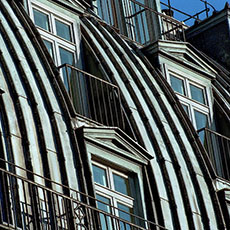
Windows on the curved mansard roofline of the top three floors at 9 rue de Castiglione, between rue de Rivoli and place Vendôme.

Windows on the east side of rue de Castiglione


Go to the home page of my web site

See the pictures I’ve taken in the United States

Take a look at the pictures I published in the Traveler’s Companion series of tourism/travel guide books, pictures of Canada, New England, and Mediterranean France

Jetlag and culture shock: Read my thoughts on what it is like taking pictures in Paris

See the pictures I’ve taken in England

Take a look at the pictures I have taken on trips to Italy

Photography workshops in Paris: Learn the secrets behind these pictures!

Portraits in Paris: with your family, friends and loved ones in the City of Lights, and the famous monuments of Paris in the background.

See the pictures I took on a trip through Alsace-Lorraine, France

What does all this new technology mean for photographers? Read my thoughts on this what this Brave New World means for visual artists.

Take a look at the pictures I took on a trip through Switzerland

See the pictures I’ve taken elsewhere in France


All images are © 2013, David Henry, all rights reserved. Written permission is required for any use.